Free, Pro, Max: pricing your AI app
Your pricing page is the second-most-important screen you'll ship. It's where interest becomes revenue — and where most AI builders either leave money on the table or scare buyers off. Here's how to structure tiers, when freemium helps, and why credits changed the game.
First, a distinction that saves a lot of arguing. A pricing model is the structure — per-seat, tiered, usage-based. A pricing strategy is the thinking behind the numbers — who you're targeting and why $12 and not $19. You need both, but the model is where you start, because it shapes the page your users actually see.
Why three tiers, named the way they are
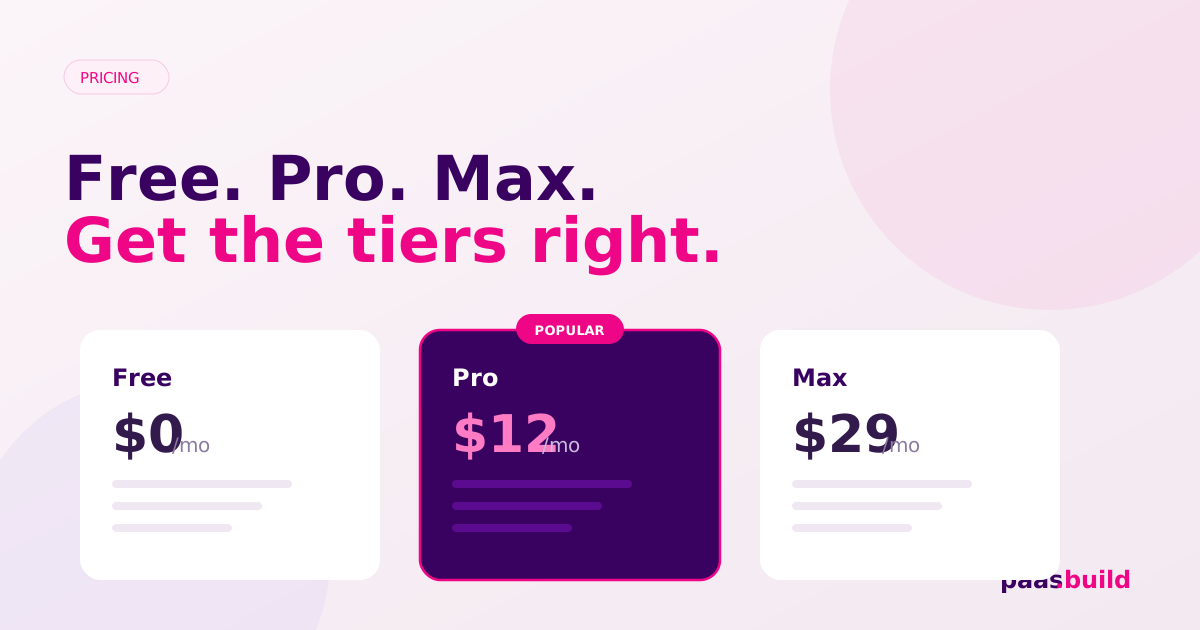
Tiered pricing scales the price against a threshold of some metric — usage, seats, features. Three tiers is the default for a reason: it gives you a floor, an anchor, and a ceiling. Free or cheap on the left, a "most people pick this" middle, and a high tier that makes the middle look reasonable.
The middle tier is the one that matters. Mark it Popular and price it where your best-fit customer lands without thinking too hard. The Max tier isn't really there to sell in volume — it's there to make Pro feel like the sensible choice.
| Tier | Job on the page | Typical AI-app price |
|---|---|---|
| Free | Acquire — get them into the funnel | $0 · limited credits |
| Pro | Convert — the anchor most pick | $12–$29/mo |
| Max | Expand — make Pro look sensible | $49–$99/mo |
Freemium is acquisition, not monetization
The biggest mistake with a free tier is treating it as a revenue line. It isn't. Freemium is a way of acquiring users, not charging them — it puts people into your funnel cheaply so some fraction converts later.
That reframes every free-tier decision. The question isn't "how do I make money on free users?" It's "does free reliably produce paid ones?" Free users who convert tend to have higher satisfaction, better retention, and dramatically lower acquisition cost than users you paid to acquire cold. If your free tier doesn't feed conversion, it's just a cost.
Free isn't a plan. It's the top of your funnel wearing a price tag of $0.
The AI wrinkle: credits
Traditional SaaS pricing assumes near-zero marginal cost per user. AI apps break that assumption — every generation costs real money in inference. So the 2026 default for AI products isn't a flat subscription; it's a hybrid: a plan that includes a quota, plus the ability to top up.
Credits do two useful things at once. They cap your downside (a heavy user can't run up an unbounded bill on a flat plan), and they feel fair to the buyer (predictable, pay-for-what-you-use, immediate cash flow for you). For most consumer-facing AI tools, prepaid credits beat pure usage-based metering — people like knowing the number before they spend it.
The clean structure: tiers for the base relationship, credit packs for the overflow. One checkout, one rate, both handled.
Ship the page, not a spreadsheet
Tell your agent your tiers — "Free, Pro at $12, Max at $29, plus $5 credit packs" — and it wires the plans, the subscription checkout and the renewals. You argue about the prices; the billing is done. That's the point of building on paas.build subscriptions: the pricing page is a prompt, not a project.
Let the data move the numbers
Your first prices are guesses. That's fine — good pricing is iterative. Instrument it: track conversion rate by tier, expansion revenue, and churn by price point. If Pro converts but nobody touches Max, your ceiling is too low to anchor. If Free never converts, it's too generous. Move one number at a time and watch what happens.
The builders who win at pricing aren't the ones who got it right on day one. They're the ones who made it cheap to change.
Your pricing page is one prompt away.
Free, Pro, Max — plans, checkout and renewals, wired for you. Live by lunch.
See subscriptions →