Meet Appside: your app’s store, on the web
Developer conversations at paas.build inspired Oded’s next venture: a faster way to create a web store that looks and feels like your app.
Pricing, retention, payments and go-live — the parts every builder hits after the product works. In plain language, no jargon.
Developer conversations at paas.build inspired Oded’s next venture: a faster way to create a web store that looks and feels like your app.
Stripe Managed Payments, Lemon Squeezy, Dodo Payments, Polar, Creem, FastSpring, Gumroad and paas.build against Paddle on approval, published fees, payouts and who is the seller of record.
Paddle, Polar, Creem, Lemon Squeezy, FastSpring and paas.build compared on approval, published fees, payouts and who is the seller of record.
Six options for sellers who do not fit Managed Payments or want a different account model, each with dated sources.
Paddle, Dodo Payments, Creem, Lemon Squeezy, Gumroad and paas.build, with payout rules and fees as published.
Polar, Dodo Payments, Paddle, Lemon Squeezy, Gumroad and paas.build, including the payout fees that change the real cost.
Stripe Connect, Adyen for Platforms, Lemonway, Checkout.com and paas.build for marketplaces and platforms that pay out to sellers.
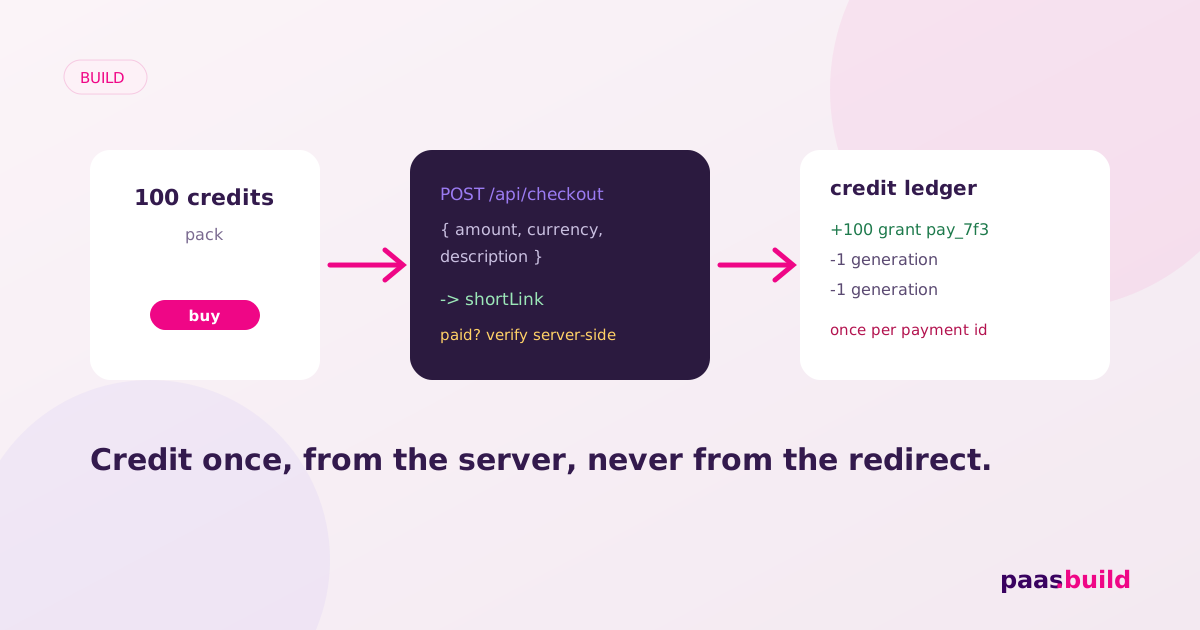
Prepaid credit packs without a billing system: one checkout per pack, verify on the server, grant once, deduct atomically, and a refund policy that survives retries.
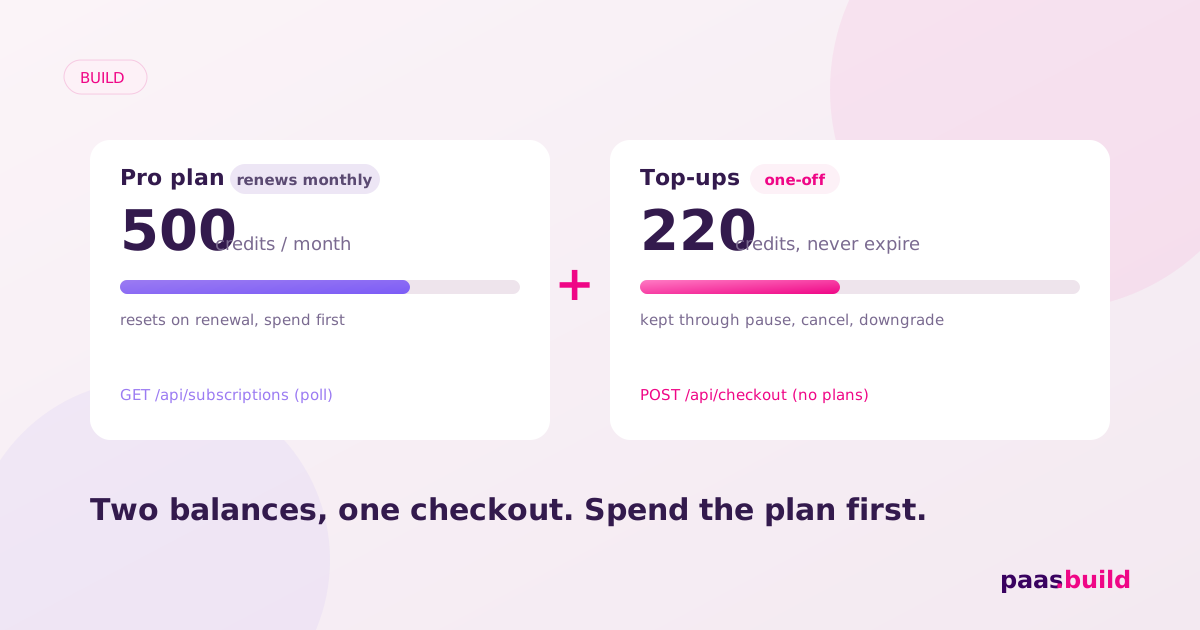
Free/Pro/Max allowances plus one-off top-ups: two balances, which to spend first, renewal and failed-payment handling, and the state table.
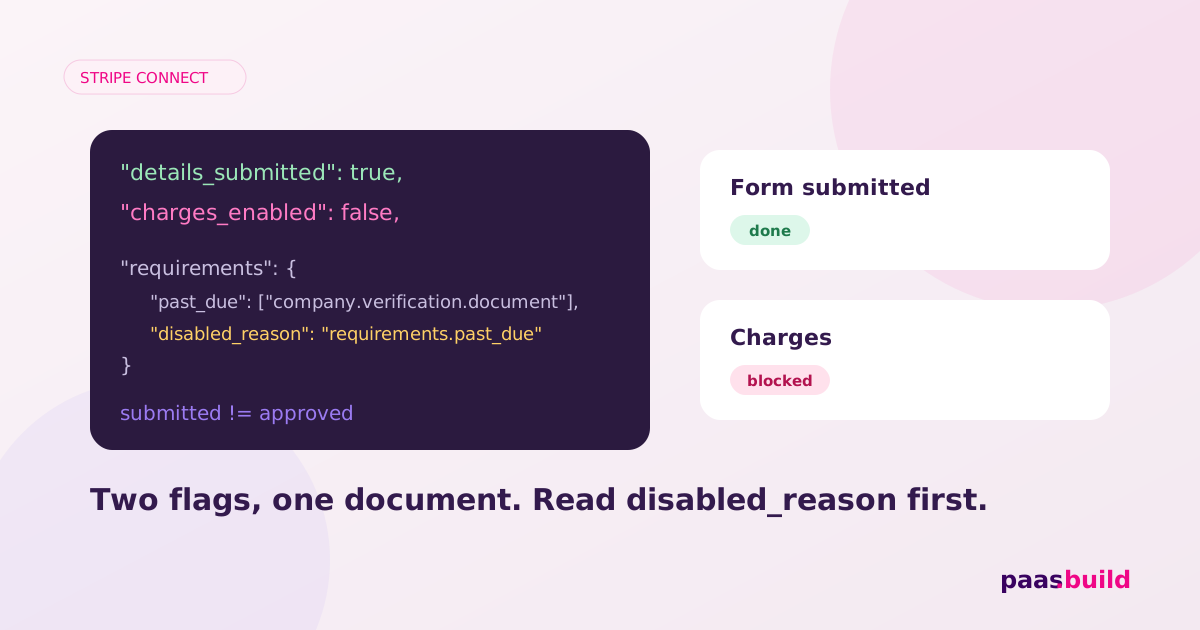
Submitted details do not mean approval. Read disabled_reason and the requirement buckets, collect only what is missing, then check the account again.
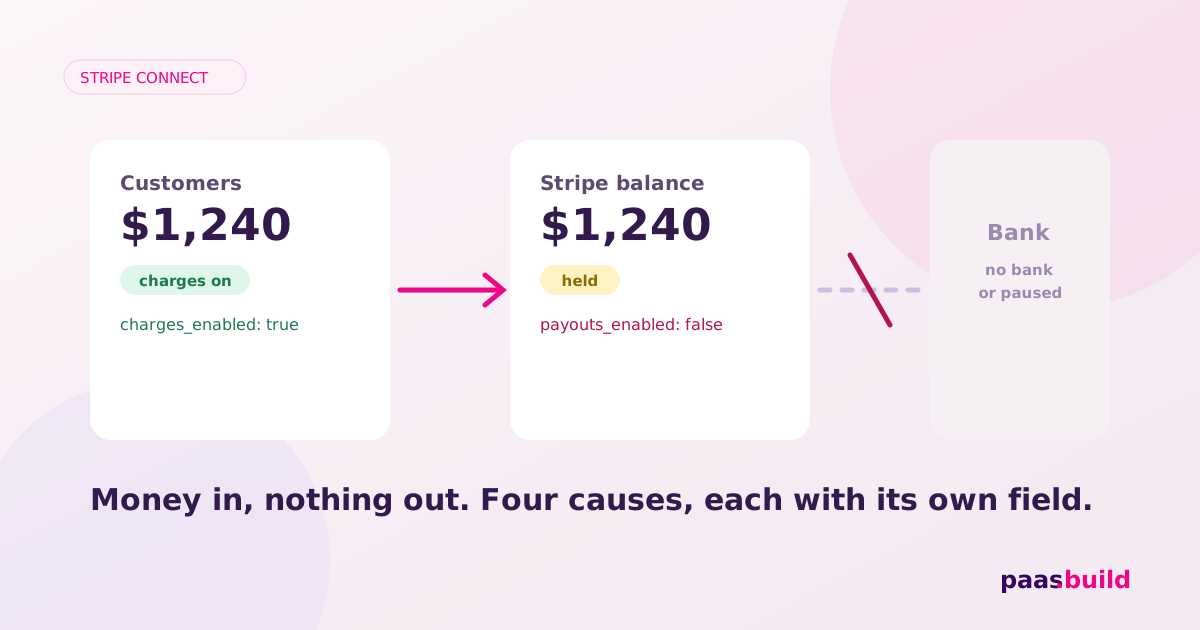
Money in, nothing out. The four causes (payout requirement, platform pause, missing or failed bank account, manual schedule) and the field that identifies each.
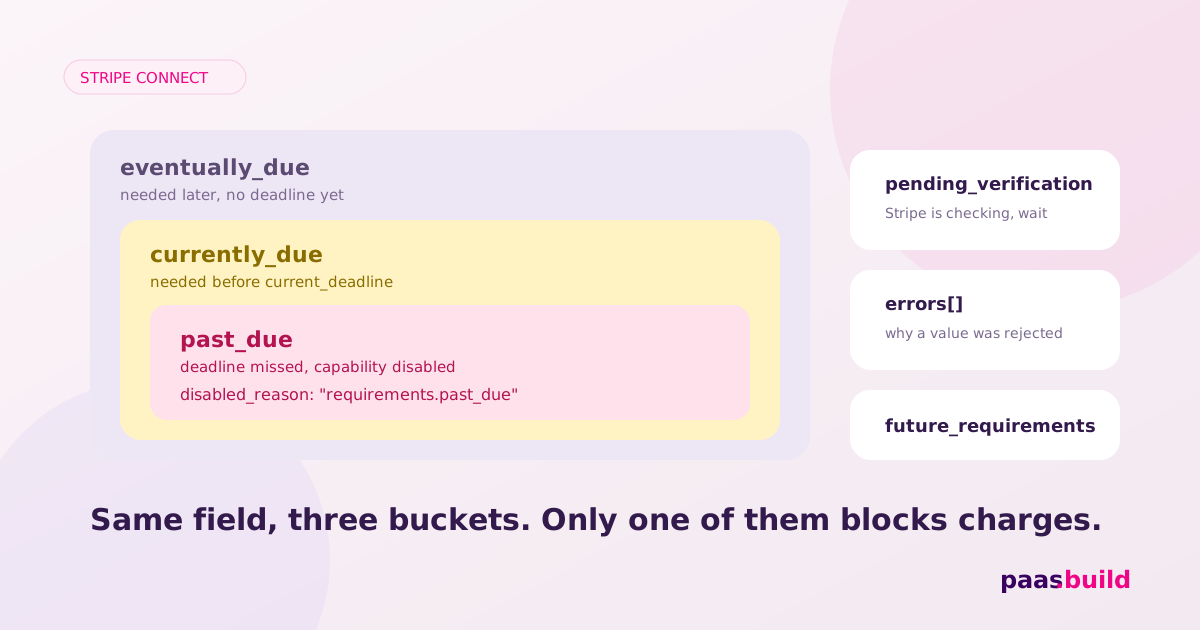
The three requirement buckets, pending_verification, errors[] and the documented disabled_reason values, with what each one means for charges and payouts.
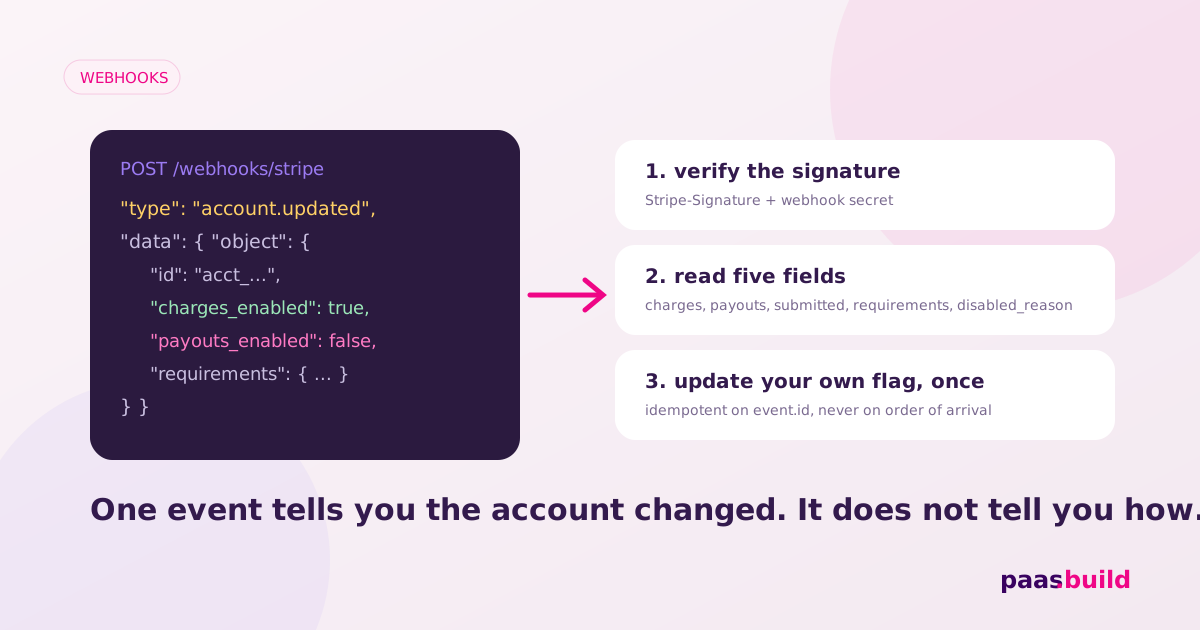
A full example event, the five fields a platform should read, idempotent handling, and a minimal Node handler that verifies the signature.
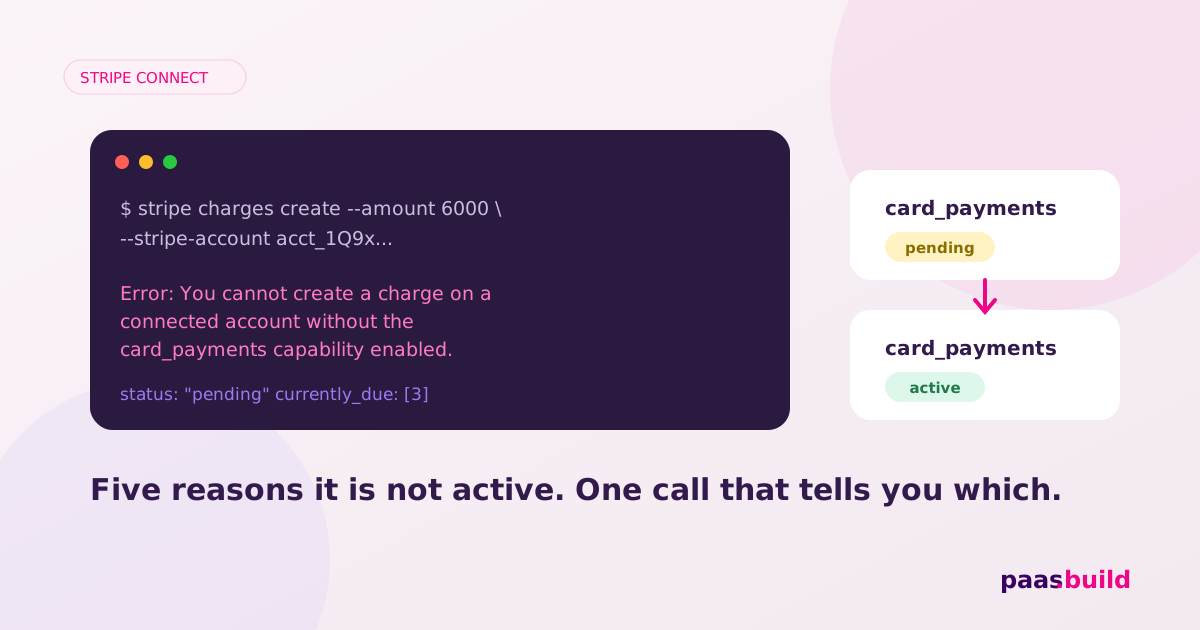
Five reasons a connected account can't take a charge, the API call that fixes each, and when the real problem is your charge type.
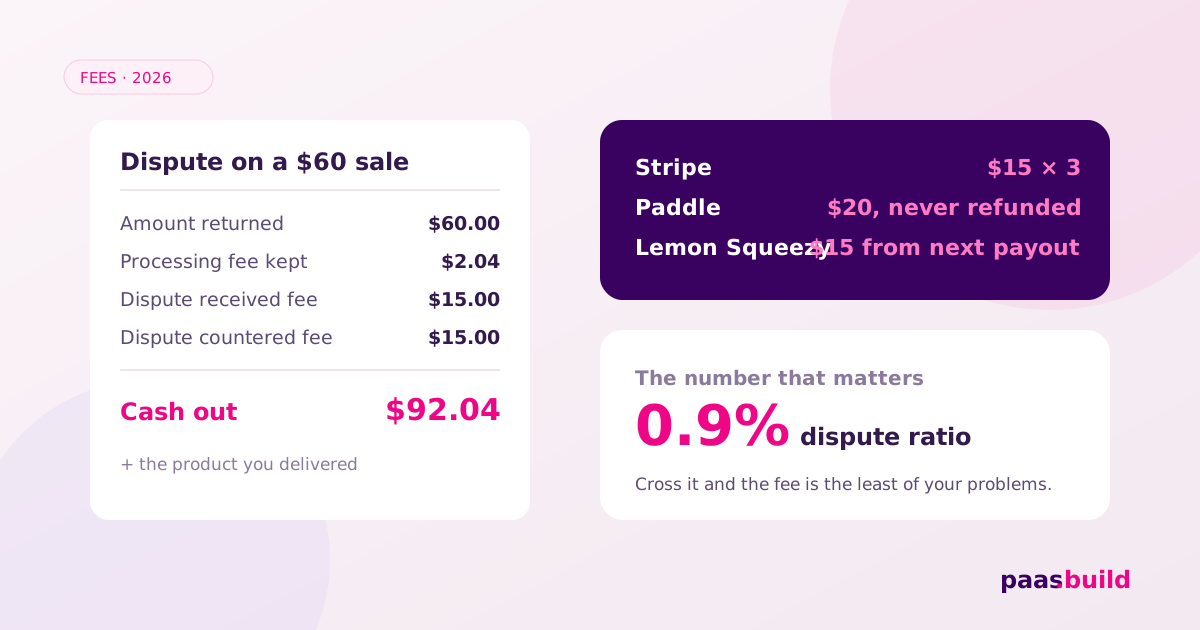
Stripe's three $15 fees, Paddle's $20 that is never refunded, Lemon Squeezy's $15, and the dispute ratio that matters more than any fee.
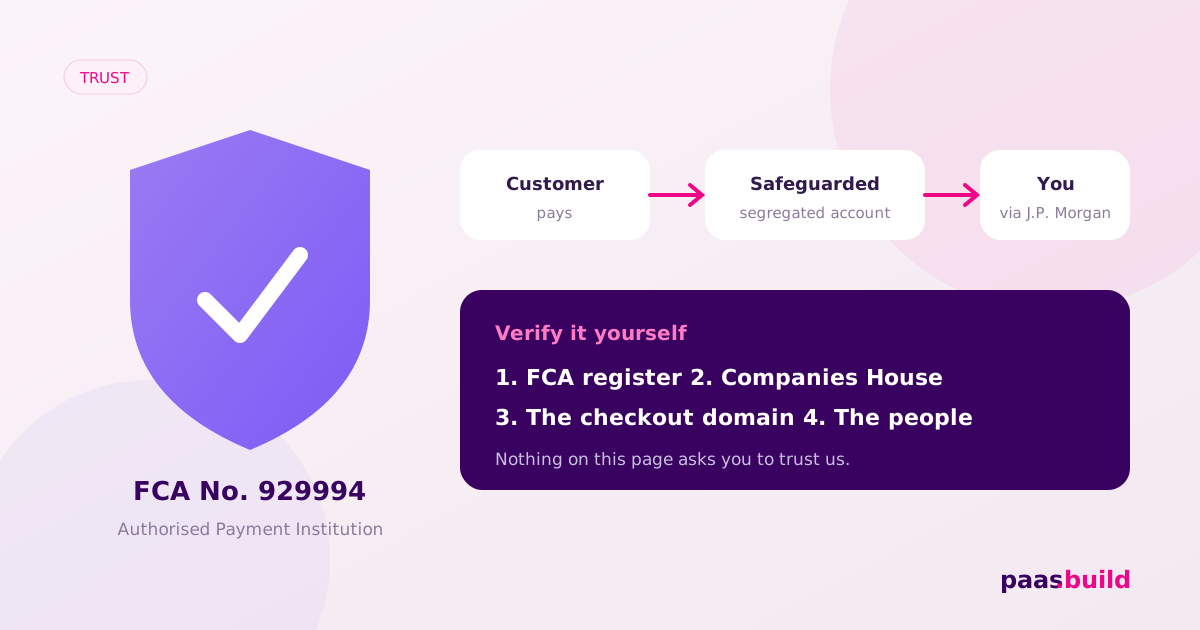
FCA No. 929994, J.P. Morgan payouts, safeguarded funds, and four ways to verify every claim without trusting us.
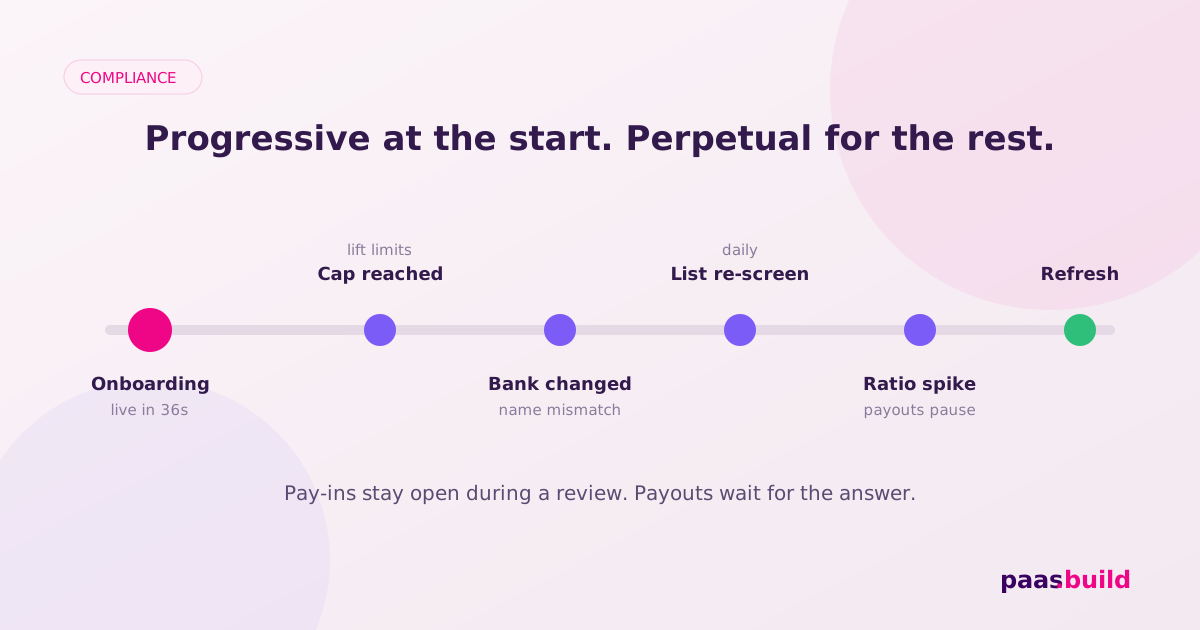
Ongoing monitoring after onboarding: what the rules require, the triggers that actually fire, and how it pairs with progressive KYB.

The old way to add payments was a form, a review queue and a five-day wait. The new way is a sentence to your agent. Here's how instant, capped go-live actually works — and why it's safe.

Tiers, freemium and credits — how to build a pricing page that acquires and converts, not just charges.

20–40% of subscription churn is just payments quietly failing. Here's how to recover it automatically.

Keeping the revenue you already won beats chasing new signups. Five tactics, ranked by ARR impact.

Merchant of Record hands away your customer to solve tax. There's another trade — and for platforms, only one works.
Tell your agent to add payments. Live the same day, one rate: 3.9%.